Choosing the right Gear Oil is not a matter of picking the thickest bottle on the shelf. The correct lubricant must match the gearbox, operating conditions, and equipment maker’s specifications. A mismatch can mean noisy gears, excess heat, or accelerated wear. Small details matter.
Tribology pioneer Peter Jost, whose 1966 report helped define the field, described tribology as “the science and technology of interacting surfaces in relative motion and of practices related thereto.” That idea sits at the heart of gear lubrication: oil must protect moving surfaces while handling pressure, heat, and friction. Yet a useful choice is rarely made from one number alone.
This guide, 7 Tips for Choosing the Right Gear Oil, explains what to check before buying. You’ll learn how viscosity grades affect performance, why lubricant specifications matter, and when additives or synthetic oils may be appropriate. A gear oil that works well in a cool, enclosed reducer may not suit a heavily loaded system running for long hours. Check the equipment manual, operating temperature, load, and lubricant compatibility. Then verify the product label against the required standard.
Real-world conditions can be messy. A manual may be missing, or a machine may run hotter than expected. Don’t guess from color or brand familiarity. Confirm the specification with the manufacturer or a qualified lubrication professional. These tips offer a practical starting point, not a substitute for equipment-specific guidance.
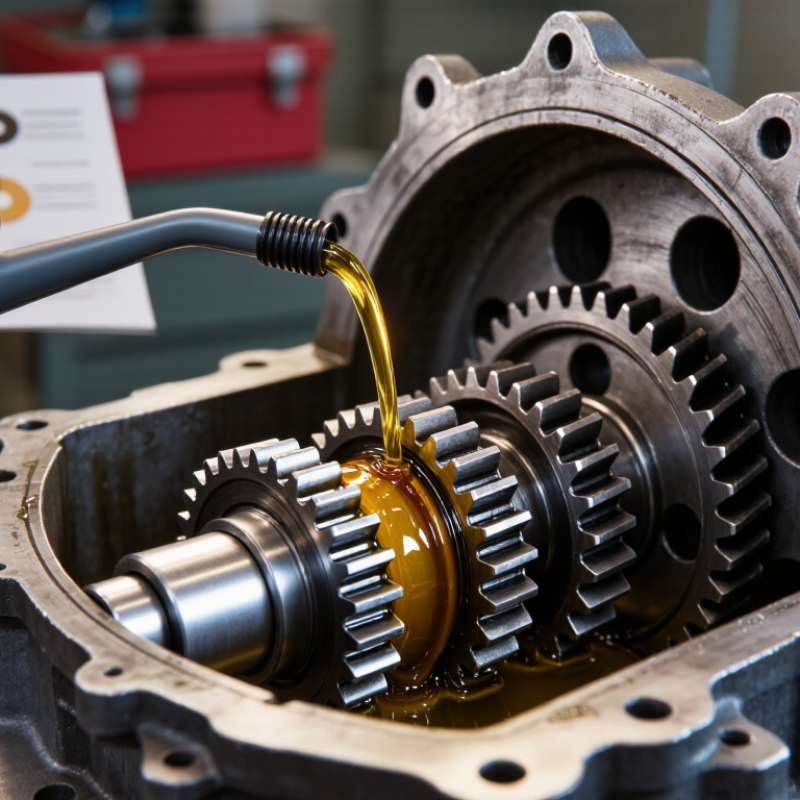
Choosing gear oil starts with the equipment maker’s specification, not the bottle’s broad claims. SAE viscosity grades describe how oil flows at different temperatures; they do not measure every aspect of protection. The required grade depends on clearances, load, and operating temperature.
For example, a hypoid axle’s sliding tooth contact can demand a different performance level from a synchronized manual transmission. GL ratings help identify performance categories, but a higher number is not automatically a safe upgrade. Some synchronizers need friction characteristics that differ from those of oils intended for heavily loaded axles.
Check the exact specification. That detail matters.
Base oil also affects performance. Mineral oils can suit many steady-duty applications, while synthetic oils often handle wider temperature swings and longer service intervals. Those benefits depend on the equipment and maintenance plan, not just the word “synthetic.”
Industrial gearboxes may need oils designed for enclosed gears, with attention to foaming, oxidation, and seal compatibility. In a cold workshop, the wrong viscosity can make startup sluggish; under heavy load, an unsuitable oil film may wear thin.
It is tempting to choose one oil for every machine, but that convenience can be costly. Compare the manual’s requirements with the oil data sheet, and ask a qualified service professional when the specification is unclear.
Before buying gear oil, check the equipment manual for the exact lubricant requirements. Match the specified viscosity grade and performance category, not just a familiar label on a container. Two oils with similar grades may have different additive packages. Those differences can matter for gears, seals, and operating temperatures.
Check the instructions for your exact model and revision. A gearbox plate may show useful details, but the manual usually explains them more fully. Note any guidance for heavy loads, cold starts, or continuous operation. Do not guess. If the specification is unclear or missing, ask the equipment manufacturer or a qualified service professional before filling the unit.
Keep a record of the oil specification and service date. This makes later maintenance easier, especially when several machines are involved. Avoid mixing oils unless the manufacturer confirms they are compatible; leftover oil can alter the intended properties. The manual may feel overly cautious, and sometimes its wording is vague. Still, that small check is better than choosing by price or appearance alone.
Check the equipment manufacturer’s specifications before selecting an oil.
ISO VG numbers indicate nominal kinematic viscosity in mm²/s (cSt) at 40°C. Use the grade specified by the equipment manufacturer; operating conditions and oil requirements also matter.
Tip 1: Match the viscosity grade to the equipment maker’s specification, not just the climate. SAE J306 grades describe gear-oil viscosity; they are not interchangeable with engine-oil grades. A 75W-90 and an 80W-90 may behave differently during a cold start, even if both suit warm operation. Check the manual. If the equipment works outdoors, note the lowest starting temperature and expected operating load. A thicker oil is not automatically better; that assumption deserves a second look.
Tip 2: Confirm the required performance rating as carefully as viscosity. API GL-4 and GL-5 indicate different performance levels and applications, but a higher number does not mean universal compatibility. Some transmissions need friction characteristics suited to synchronizers, while certain heavily loaded hypoid axles call for another specification. Read the equipment documentation and the oil’s technical data sheet. If the requirement is unclear, ask a qualified service professional before filling.
Tip 3: Consider how the machine is actually used. Frequent towing, long climbs, or repeated stop-start work can raise gearbox temperatures. Still, do not choose a grade by workload alone. Check the specified rating, ambient-temperature range, and service interval together. A small label on the housing can be easy to misread, so verify the exact model and component. Tiny detail, big difference. Recheck the level and look for leaks after service.
| Tip | What to Check | How to Choose | Why It Matters |
|---|---|---|---|
| 1. Identify the component | Determine whether the oil is for a manual transmission, differential, transfer case, or another gearbox. | Use the fluid type specified for that component; do not assume all gearboxes use the same oil. | Different designs can require different viscosity, friction behavior, and additive chemistry. |
| 2. Follow the equipment specification | Check the owner’s manual, service information, or component data plate for the required specification. | Match the stated specification and approval, including any specific viscosity grade and performance category. | A general-purpose gear oil may not meet the requirements of a particular transmission or axle. |
| 3. Select the specified viscosity grade | Look for the SAE J306 gear-oil grade, such as 75W-90, 80W-90, or 75W-140. | Choose only a grade permitted by the equipment maker. The “W” portion relates to low-temperature viscosity performance; the second number indicates the high-temperature grade range. | Viscosity affects cold shifting, lubrication, and oil-film thickness. Gear-oil grades are not directly equivalent to engine-oil grades. |
| 4. Match the performance rating | Check the required API gear-service category, such as GL-4 or GL-5, if one is specified. | Use the category called for by the component manufacturer. Do not treat GL-4 and GL-5 as automatically interchangeable. | Performance categories address different service demands. Some synchronized transmissions require particular friction characteristics or material compatibility. |
| 5. Account for operating temperatures | Consider the expected cold-start temperatures and normal operating conditions. | Within the approved choices, select a grade suitable for the equipment’s temperature range; consult the manual for permitted alternatives. | Oil that is too viscous when cold can hinder circulation or shifting, while an unapproved grade may not protect the unit as intended at operating temperature. |
| 6. Check material and friction compatibility | Review requirements for synchronizers, seals, and metals used in the gearbox. | Use a fluid specifically documented as suitable for the application and required materials; do not rely on the label “gear oil” alone. | Incorrect friction behavior can affect shift quality, and unsuitable chemistry may be incompatible with some component materials. |
| 7. Verify condition and service interval | Check the recommended change interval and inspect for leaks, contamination, or abnormal noise. | Follow the equipment maker’s service schedule and use the specified fill quantity and procedure. Investigate unusual metal particles or a burnt odor. | Correct oil selection cannot compensate for low, degraded, or contaminated lubricant. |
Important: Specifications and permitted viscosity grades vary by equipment. The manufacturer’s service information takes priority over general selection advice.
Gear design shapes the oil’s job. A heavily loaded worm gear may need different protection from a fast-running helical gearbox. Sliding contact creates friction and heat, while rolling contact brings different demands. Match the oil’s viscosity and additive performance to the gear type and the equipment maker’s specifications. Small details matter. Check whether the gearbox uses splash lubrication or a pump; oil that is too thick may not reach every contact point quickly.
Operating conditions can change the choice. Note the usual load, speed, ambient temperature, and duty cycle, then consider brief overloads or frequent starts. Heat changes everything. A dusty workshop, damp environment, or repeated temperature swings can also affect oil life and seal compatibility. It is tempting to treat viscosity as the whole answer, but that shortcut can miss foaming, oxidation, or wear protection. I would compare the operating manual with actual conditions, not assume the machine always runs as intended. If the oil darkens, smells burnt, or contains visible particles, investigate the cause before simply changing grades. There is no universal answer: verify the required specification, and ask a qualified lubrication specialist when design details or service history are unclear.
Gear oil must match the gearbox, not just the vehicle or machine. Check the equipment manual for the required viscosity and performance specification. Temperature, load, and gear design all affect the right choice. A lubricant that looks similar may not meet the same requirements. Avoid mixing oils unless their compatibility is confirmed by reliable technical guidance.
Tip: Before topping up, verify the oil label against the manual and note the product type and date. Keep a small maintenance log. Easy to miss.
Plan inspections around the manufacturer’s service interval, then adjust for severe heat, heavy loads, or frequent stop-and-start operation. Look for leaks near seals and plugs. During a scheduled change, check for water cloudiness, a burnt odor, or unusual metal particles; these signs deserve investigation, but do not diagnose the cause by themselves. I have found that people often postpone checks when equipment still sounds normal. That is not always a good indicator. Use the specified oil level and a clean filling tool, and record any change in noise or temperature for comparison.
Check the equipment manual for its required viscosity and performance specification. Gear design and operating conditions matter.
No. A heavily loaded worm gear and a fast-running helical gearbox can have different needs. Small details matter.
Note load, speed, ambient temperature, and duty cycle. Repeated starts, dusty air, dampness, and temperature swings can affect oil life.
No. Also consider additive performance, foaming, oxidation, and wear protection. I might be tempted to focus only on viscosity, but that can miss important requirements.
Avoid mixing them unless reliable technical guidance confirms compatibility. Similar-looking oils may not meet the same specification.
Compare the oil label with the manual. Note the oil type and date, and use a clean filling tool. Easy to miss.
Follow the manufacturer’s service interval. Severe heat, heavy loads, or frequent starts may call for closer inspections.
Look for leaks, cloudy oil, a burnt odor, or visible metal particles. These signs need checking, but do not prove a specific cause. Record changes in noise or temperature; normal sound is not always reassuring.
Choosing the right Gear Oil starts with understanding the different oil types and the applications they are designed to support. Always check the equipment manufacturer’s specifications before making a selection, since these recommendations help identify the required viscosity and performance rating. The correct choice can help protect components, reduce friction, and support reliable operation.
Also consider the gear design and the conditions in which the equipment operates, including load, temperature, speed, and exposure to moisture or contaminants. Confirm that the selected oil is compatible with the system and any existing lubricant before use. Once the oil is in service, follow a regular maintenance plan: check its condition, look for signs of contamination or wear, and replace it at appropriate intervals. These steps help keep the equipment operating as intended.

Longhai