Buying Automotive Gear Oil across borders is not a simple price comparison. Product labels, operating conditions, and approval claims can vary widely between markets. A lubricant that performs well in a passenger car may fail in a hypoid differential, commercial axle, or electric-drive reduction unit. This guide introduces seven practical buying tips for global buyers, based on recognized technical standards and market evidence.
Global vehicle demand remains substantial. The International Organization of Motor Vehicle Manufacturers reported approximately 93.5 million vehicles produced worldwide in 2023. Many of these vehicles still use conventional or hybrid drivetrains. Meanwhile, the International Energy Agency reported nearly 14 million electric car sales in 2023. This shift matters because some electric vehicles require specialized fluids for high-speed gears, seals, and electrical compatibility. Check the application carefully.
Standards provide a safer starting point. SAE J306 defines automotive gear lubricant viscosity classifications, while API categories help describe performance requirements for many automotive applications. However, a viscosity grade alone is not enough. OEM approvals, axle design, temperature range, load conditions, and warranty requirements must also be verified. ACEA’s Vehicles on European Roads report shows that Europe’s passenger-car fleet remains relatively old, with an average age above twelve years. Older vehicles may need different protection from newer systems. That detail is easy to miss.
Look beyond the lowest quotation. Request current technical data sheets, safety data sheets, batch traceability, and test evidence. Confirm packaging, storage conditions, delivery temperatures, and local documentation. A missing approval can become an expensive mistake. Even experienced buyers should recheck assumptions, especially when suppliers use broad phrases such as “universal” or “premium.”
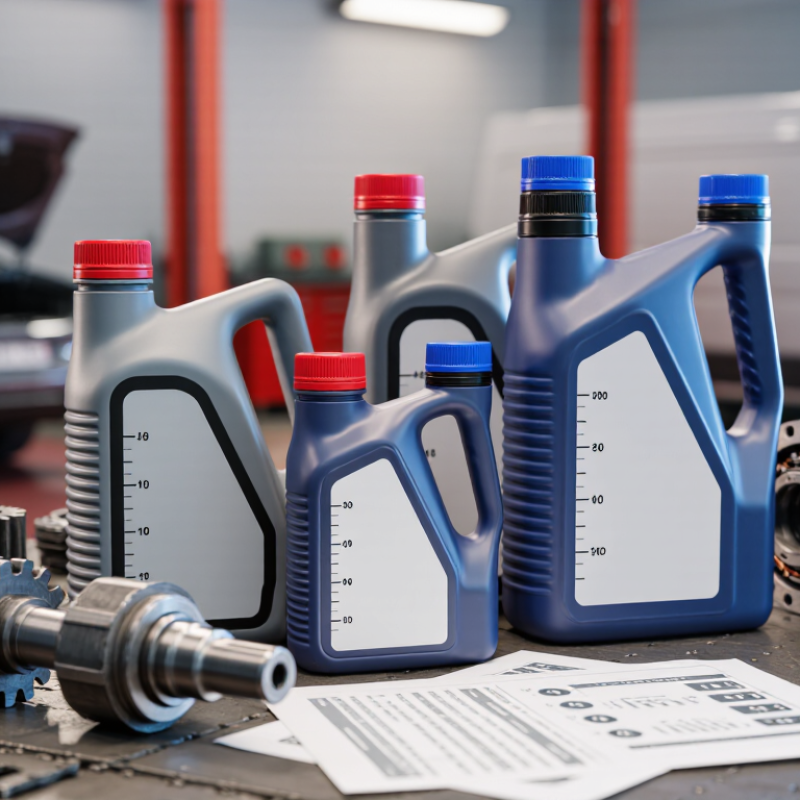
Automotive gear oil buying starts with the specification, not the price. SAE J306 defines viscosity grades such as 75W-90, 80W-90, and 75W-140. The first number indicates cold-flow performance. The second reflects viscosity at operating temperature. A 75W-90 may suit cold regions and standard passenger vehicles. Heavy towing can require 75W-140, but only when the vehicle maker permits it.
API GL-4 and GL-5 are not interchangeable by default. GL-5 generally offers higher extreme-pressure protection for hypoid differentials. However, some manual transmissions contain yellow-metal synchronizers that may need a suitable GL-4 fluid. Check the service manual, axle label, and supplier technical data sheet. Look for formal references to ASTM test methods, SAE J306, and required manufacturer approvals. Packaging alone proves little.
Market data shows why careful selection matters. A 2024 Fortune Business Insights outlook estimates the global automotive gear oil market will grow at about 4% annually through the decade. Another 2024 industry assessment from Persistence Market Research reports stronger demand in commercial vehicles and replacement maintenance. These estimates differ, which deserves caution. Market boundaries are inconsistent. Buyers should verify the reporting method before using growth figures.
For global shipments, confirm the viscosity grade against local temperatures. A drum stored outdoors at minus 20°C needs different handling than one used in tropical traffic. Check batch numbers, test dates, seal condition, and technical documents. One practical mistake remains common: choosing a thicker oil for “extra protection” without confirming pumpability or synchronizer compatibility. That choice can increase drag, shift effort, or create avoidable wear.
Choosing the right gear oil starts with the gearbox, not the bottle. A manual transmission with synchronizers may need a GL-4 fluid for smooth engagement. Some GL-5 oils contain additives that can affect yellow-metal components in certain designs. This risk is not universal, so guessing from viscosity alone is unsafe. Read the vehicle manual and gearbox service label carefully.
An automatic transmission usually requires automatic transmission fluid, not conventional gear oil. That is a different fluid family. Transfer cases may also require a specific low-viscosity lubricant. For axles and differentials, hypoid gears often demand higher extreme-pressure protection, such as a suitable GL-5 specification. Match the required SAE grade to the operating climate. A 75W-90 oil may suit moderate conditions, while cold regions can require easier-flowing products.
In workshop checks, I look for difficult cold shifts, unusual whining, and metallic particles on the drain plug. These clues can reveal a mismatch before serious wear appears. However, symptoms are not proof. A worn bearing can imitate the wrong oil. Confirm the specification through the vehicle manual, technical data sheet, and required approvals. I once focused too heavily on viscosity and overlooked the synchronizer requirement. That mistake was avoidable. Record the gearbox code, driving load, temperature range, and oil quantity before purchasing. Even a small capacity error can cause foaming, heat, or poor lubrication.
| Tip | Buying Focus | Typical Vehicle or Gearbox | Suitable Oil Type or Specification | Why It Matters | What to Check Before Purchase |
|---|---|---|---|---|---|
| 1 | Identify the gearbox design | Manual transmission, conventional differential, transfer case, or hypoid final drive |
Manual gear oil Common viscosity grades include SAE 75W-90, 80W-90, and 85W-140. |
Different gear sets generate different sliding forces, temperatures, and lubrication demands. A hypoid axle generally requires stronger extreme-pressure protection than many synchronized manual transmissions. | Confirm the vehicle manual, gearbox plate, service data, and the required lubricant category before selecting viscosity. |
| 2 | Match the required performance category | Passenger cars, light commercial vehicles, trucks, buses, and off-road equipment |
API GL-4 may be specified for many synchronized manual transmissions. API GL-5 is commonly specified for hypoid axles and high-load differentials. |
GL-4 and GL-5 are not automatically interchangeable. Some transmissions use yellow-metal synchronizers that may require a lubricant specifically approved for that application. | Look for the exact API category or equipment-maker performance requirement. Do not select only by viscosity grade. |
| 3 | Choose viscosity for climate and operating temperature | Vehicles operating in cold winters, temperate regions, hot climates, or high-load applications |
Cold climates 70W-90 or 75W-90 Moderate climates 80W-90 High-load or hot service 85W-140 when specified |
The first number relates to low-temperature flow, while the second number indicates high-temperature viscosity. Correct selection supports cold shifting and film strength at operating temperature. | Review the ambient-temperature chart in the vehicle documentation and consider towing, payload, terrain, and seasonal temperature extremes. |
| 4 | Check synchronizer compatibility | Manual transmissions with brass, bronze, or other yellow-metal synchronizer components | Use a synchronized-transmission lubricant that states compatibility with the required gearbox and performance category. | Some extreme-pressure additive systems can affect the friction behavior or material compatibility required for smooth synchronization and long component life. | Verify synchronizer-material compatibility, friction characteristics, and whether the product is approved or recommended for the specific transmission. |
| 5 | Select the correct limited-slip formulation | Limited-slip differentials used in performance vehicles, pickups, and off-road vehicles | Limited-slip differential oil, or a conventional gear oil with the required friction-modifier treatment when permitted by the vehicle documentation. | Limited-slip clutch packs need controlled friction to prevent chatter, vibration, and uneven torque transfer during cornering or traction events. | Confirm whether the differential requires a friction modifier, a factory-filled limited-slip fluid, or a specific axle lubricant. |
| 6 | Evaluate base oil and service interval | Long-distance fleets, heavy-duty vehicles, high-temperature service, and extended-drain programs | Mineral, semi-synthetic, or full-synthetic gear oil, provided the required performance specification and viscosity are met. | Synthetic formulations generally offer better low-temperature flow, oxidation resistance, and thermal stability, but suitability depends on seals, design, duty cycle, and maintenance policy. | Compare technical data for viscosity index, pour point, oxidation control, seal compatibility, drain interval, and operating temperature. |
| 7 | Verify packaging, compliance, and traceability | International purchasing, mixed vehicle fleets, workshops, distributors, and cross-border shipments | Product packaging should clearly state viscosity grade, performance category, application, batch identification, net volume, and handling information. | Clear labeling reduces application errors and supports customs, warehouse control, quality checks, and product traceability across different markets. | Check technical data sheets, safety data sheets, batch or lot numbers, manufacture date, language requirements, container integrity, and local import regulations. |
Global buyers should match gear oil viscosity with climate, load, and gearbox design. SAE 75W-90 can support cold starts and heavy axle work, but it is not automatically suitable everywhere. A 75W-140 grade may protect loaded differentials in hot conditions. It can also increase drag and fuel use. Check the vehicle manual and operating temperature range before choosing. Small details matter.
Additives deserve careful attention. Extreme-pressure additives help protect hypoid gears under sliding contact. However, some sulfur-phosphorus packages may affect yellow-metal components in older manual transmissions. Limited-slip differentials may also require friction modifiers for smooth clutch operation. Too much additive is not better. It can change shifting feel, noise, or seal behavior. Ask for technical data, not only a sales description.
Performance standards provide a useful checkpoint. Compare the product’s SAE J306 viscosity classification with the required grade. Review API GL performance claims, while confirming whether the application needs GL-4, GL-5, or another specification. Laboratory results for wear, oxidation, corrosion, and low-temperature flow add credibility. Batch traceability and a current certificate of analysis improve purchasing reliability. Still, test results may not predict every fleet condition. A small field trial can reveal foaming, leakage, or difficult cold shifting before a large order. That extra step is easy to overlook.
Evaluate viscosity, additives, and performance standards before selecting a gear oil for international applications.
The chart shows the minimum kinematic viscosity at 100°C for selected high-temperature SAE J306 viscosity grades. Multigrade products such as 75W-90 and 80W-90 use the SAE 90 high-temperature range, while their winter rating describes low-temperature flow requirements.
Select the viscosity grade specified for the axle, transmission, ambient temperature, and operating load.
For cold climates, compare the winter rating and low-temperature viscosity data rather than relying only on the 100°C value.
Confirm the required API GL category or applicable vehicle and equipment specification before purchase.
Review extreme-pressure, anti-wear, oxidation-control, corrosion-control, and foam-control requirements.
Check compatibility with synchronizers, seals, yellow metals, limited-slip differentials, and wet-clutch systems.
Request technical data for viscosity, oxidation stability, wear protection, corrosion protection, and foaming performance.
Check the technical data sheet, safety data sheet, batch traceability, packaging requirements, and regional regulatory documents.
Reference basis: SAE J306 viscosity classification. Viscosity grade alone does not confirm load-carrying ability, additive compatibility, or suitability for a specific vehicle.
Global buyers should verify automotive gear oil before discussing price or shipment volume. Check the required viscosity grade, performance claims, base oil type, and additive suitability for the intended gearbox. Request a recent certificate of analysis, safety data sheet, technical data sheet, and production batch record. Compare laboratory values with the declared specifications, especially viscosity, density, flash point, and water content. A sample test can reveal problems that paperwork misses. It is a small cost.
Packaging deserves equal attention. Inspect the container material, cap seal, inner liner, label adhesion, and resistance to oil leakage. Confirm that the drum, pail, or bottle suits long-distance transport and changing temperatures. Labels should show product name, viscosity grade, batch number, net volume, manufacturing date, shelf life, and storage instructions. Ask for pallet photos before loading. I once underestimated label durability; sunlight and moisture damaged important information during storage. That mistake was avoidable.
Regulatory checks must match the destination market. Confirm language requirements, chemical declarations, recycling marks, import documents, and any required conformity statements. Review the SDS against current local rules, not an old template. Ask whether the formula has changed since the last shipment. Keep retain samples and inspection records for traceability. Independent testing adds confidence when the supplier is new or claims seem unusually strong. Do not rely only on a polished certificate. Verify its issuer, date, scope, and matching batch number.
Global buyers should compare suppliers beyond the lowest quoted price. Request current technical data, safety documents, batch certificates, and compatibility statements. A reliable supplier explains base oil selection, additive performance, viscosity grades, and testing methods. Ask for a small production sample. Check whether it matches the sealed batch shipped later. This simple check can expose weak quality control.
Supplier audits matter too. Review factory capacity, storage conditions, calibration records, and complaint history. Do not accept polished photos as proof. Direct evidence is better.
Build a landed-cost sheet before negotiating. Include oil price, drums or pails, pallet charges, inspection fees, insurance, freight, duties, and local delivery. Ask for quotations under the same quantity and delivery term. Otherwise, comparisons become misleading.
A cheaper offer may use thinner packaging or exclude port charges. Confirm minimum order quantities and payment milestones. Currency changes can alter the final budget. Keep a reasonable contingency.
My own preference is transparent pricing, though I still sometimes underestimate port delays.
Shipping needs more than a departure date. Confirm production lead time, loading photos, pallet dimensions, container utilization, and document release timing. Request moisture protection for long ocean routes. Verify labels, batch numbers, and seals before unloading.
After-sales support should include a named technical contact, response targets, retained samples, and a documented claim process. Ask how they investigate leaks, contamination, or field performance concerns.
Good support is measurable. Test it before a large order by sending a technical question. A slow answer today may become a costly delay tomorrow.
Match viscosity with climate, load, and gearbox design. A 75W-90 grade may suit cold starts and heavy axle work. A 75W-140 grade may protect loaded differentials in hot conditions. Always check the vehicle manual and operating temperature range.
No. Thicker oil can increase drag and fuel consumption. It may also affect cold shifting. A higher grade is not automatically better.
Extreme-pressure additives protect hypoid gears during sliding contact. Some sulfur-phosphorus packages may affect older yellow-metal components. Too much additive can change shifting feel, noise, or seal behavior. Ask for technical data.
Some limited-slip differentials need friction modifiers. These additives support smoother clutch operation. Confirm compatibility before ordering. Guessing here can become expensive.
Review the stated viscosity classification and required performance grade. Request laboratory results for wear, oxidation, corrosion, and low-temperature flow. Batch traceability and a current certificate of analysis are useful. Documents matter.
Laboratory results may not predict every fleet condition. A small trial can reveal foaming, leakage, or difficult cold shifting. Test one vehicle or a limited batch before placing a large order. I sometimes underestimate this step.
Build a landed-cost sheet for every quotation. Include oil, containers, pallets, inspections, insurance, freight, duties, and local delivery. Also confirm minimum order quantities and payment milestones. A cheap offer may exclude port charges.
Confirm production lead time, loading photos, pallet dimensions, and container utilization. Check document release timing for the shipment. Request moisture protection for long ocean routes. Verify labels, batch numbers, and seals before unloading.
Ask for a named technical contact, response targets, retained samples, and a claim process. Test support with one detailed technical question. A slow reply today may cause a costly delay later. Support should be measurable.
Buying Automotive Gear Oil for international applications requires more than comparing prices. Start by understanding the required gear oil grade, viscosity classification, and equipment specifications, then match the product to the vehicle, transmission, differential, or other gearbox system. Check whether the formulation is mineral, synthetic, or blended, and evaluate its additive package, wear protection, oxidation resistance, thermal stability, and compliance with relevant performance standards. Using the wrong oil may reduce efficiency, increase noise, or accelerate component wear.
Global buyers should also verify product quality through technical data sheets, batch consistency, safety documentation, packaging durability, labeling accuracy, and regulatory compliance in the destination market. When comparing suppliers, assess total cost rather than unit price alone, including minimum order quantities, lead times, shipping conditions, customs support, and payment terms. Reliable after-sales service, responsive communication, and the ability to provide certificates or customized packaging can further reduce purchasing risks and support stable long-term supply.

Longhai